-
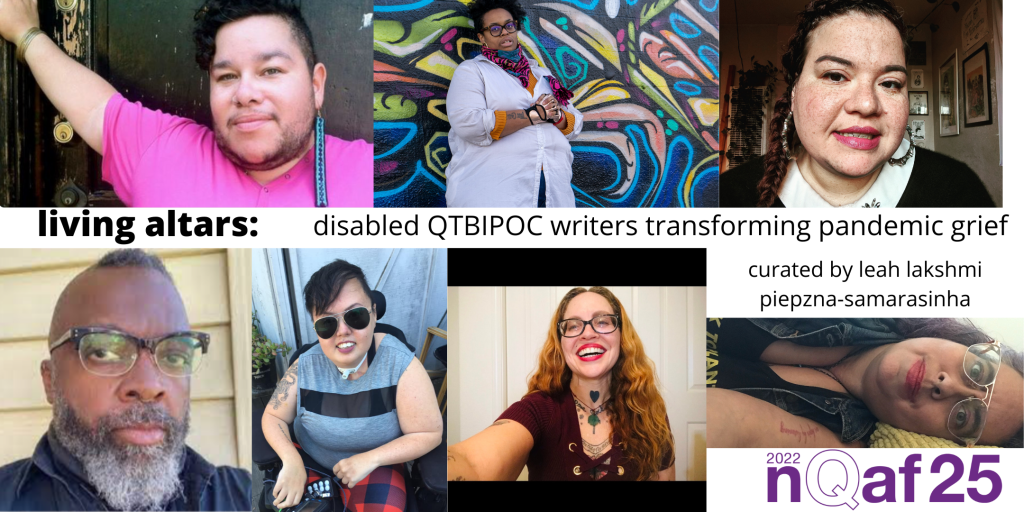
Living Altars is a a kitchen table disabled queer brown cultural project that aims to build kinship, space and support among disabled, sick, neurodivergent, Mad and Deaf/ HOH queer, trans and Two Spirit Black, Indigenous and POC writers and creators.
Living Altars current projects include:
The Stacey Park MIlbern Liberation Arts Residency, an evolving series of residency opportunities (group longer ones, shorter 3 day ones for residents with less time/ different access needs, and one day in- person ones in Philly ) where disabled QTBIPOC writers are supported in our work.
Monthly online coworking “write from bed” (or the couch, or your chair, or the bath, or the floor….) coworking writing spaces by and for QTBIPOC writers,
Seasonal grief and elderhood groups for disabled QTBIPOC artists and activists over 40.
Our focus is on supporting disabled QTBIPOC writers without generational wealth, class privilege, rich parents, partners or institutional support to do their sacred and important cultural work, work that has always been at the heart of disability justice.
We believe in supporting disabled QTBIPOC writers to have space not just to write, but to break the isolation from each other we are often caught in.
We understand that the present moment means we are at a crux of living in mass grief and trying to do creative work anyway, so we create grief stewardship and healing spaces because those are what our souls, hearts and the work requires.
We honor the disabled kin we’ve lost by doing creative work while we are on this plane.
LIVING ALTARS
amplifying, connecting and building power by and for disabled QTBIPOC writers
 LIVING ALTARS